How to Change Strings on a Classical and Flamenco Guitar

Changing the strings on a classical or flamenco guitar is one of the simplest ways to refresh your instrument’s tone, feel, and playability, yet many players put it off because the process can seem intimidating. Unlike steel-string acoustics or electrics, nylon-string guitars have their own unique methods of tying, securing, and stretching strings, especially at the bridge. But with a bit of guidance, restringing becomes a quick, rewarding ritual that deepens your understanding of your instrument and the sound it produces.

Whether you’re a seasoned performer looking to keep your guitar in top shape or a beginner ready to learn essential maintenance, mastering how to properly change your classical or flamenco guitar strings will help ensure better intonation, longer string life, and a more resonant, vibrant tone. In this guide, we’ll walk through the steps, materials, and tips you need to confidently restring your guitar and bring out its best voice.
Changing Strings on a Classical and Flamenco Guitar

When Should You Change Your Strings?

I personally change my strings every 2–3 months, but it really depends on how much you play. If the strings start to look worn or rusty, or if the sound becomes dull and lifeless, that’s a good sign it’s time for a fresh set.

Rusty Strings on a Nylon String Guitar

How to put on new strings on a classical and flamenco guitar

  • First, remove all the strings from your guitar by loosening the tuning keys until the tension is completely released. Once the strings are slack, unwrap them from the bridge first. After they’re free at the bridge, unwind them from the tuning keys and remove them completely.
  • After removing the strings, if the guitar is dusty, this is a great opportunity to clean it using a slightly damp cloth.
  • When you open a new set of strings, you’ll notice that all the string ends look the same except for the low E string. The low E has a slightly narrower, tapered end, and this end is designed to go into the tuning key. Always start with the low E string when changing your strings. Begin by securing the standard end at the bridge, and after insert the narrow, tapered end into the tuning key.

How to Make the Hook

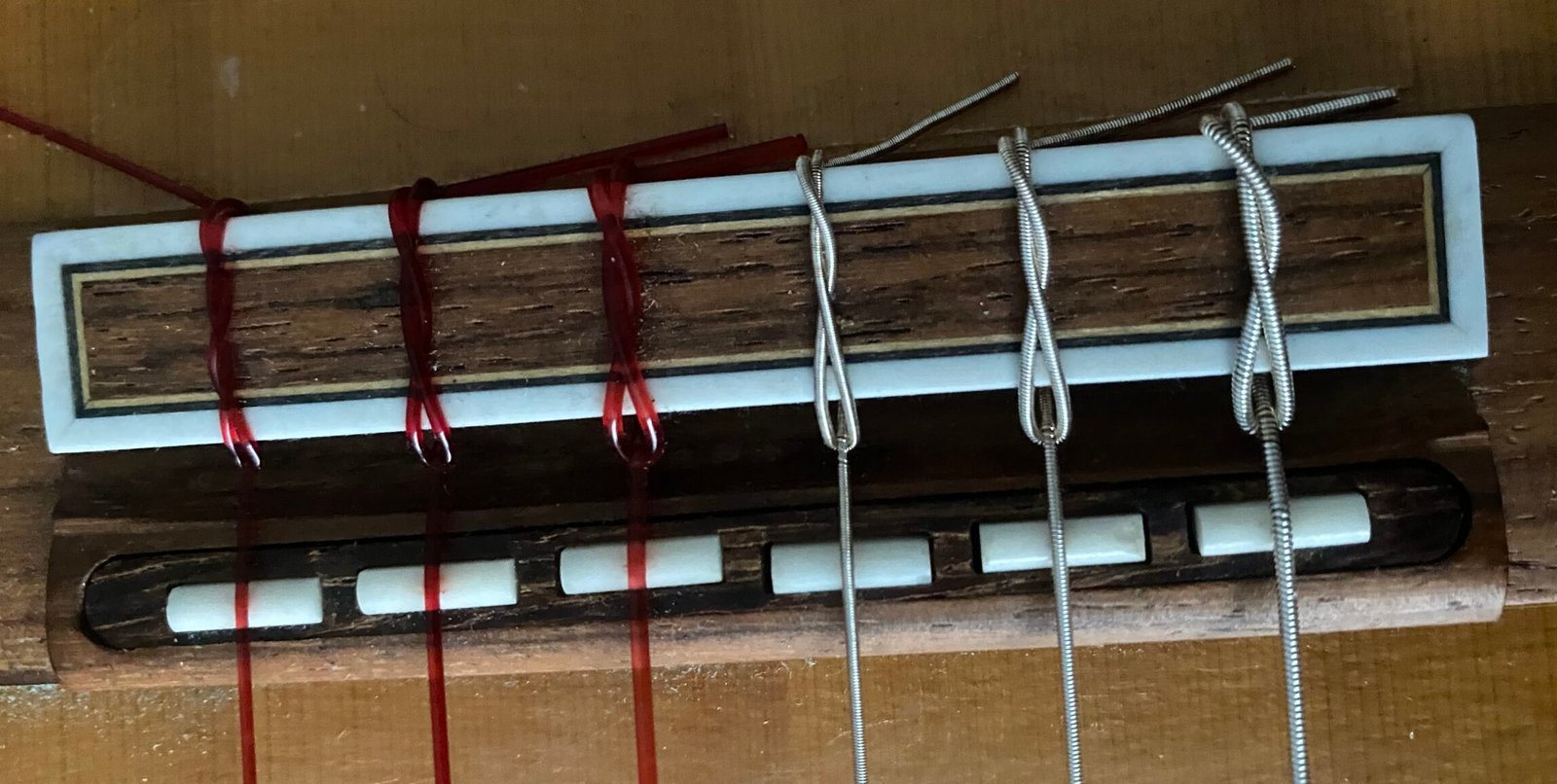
The hook is the most important part of changing strings because it provides stability at the bridge.

  1. Start by threading the string through the hole in the bridge.
  2. Take the short end of the string and loop it back over the main string, then bring it under to form a hook.
  3. Repeat this step to create a double hook for extra security.
  4. Finally, pull the string gently to tighten and stabilize the hook at the bridge.

The Strings I use

I use La Bella Red Nylon Flamenco Guitar Strings. They settle in just a few days and produce a bright, vibrant sound, perfect for classical and flamenco playing. Order it from Amazon:

How to Help Your Strings Settle Faster

New nylon strings naturally take some time to stretch and stabilize, but you can help them settle more quickly and stay in tune with these simple steps:

  1. Overtune the guitar: One trick to help new nylon strings settle faster is to slightly overtune them. Instead of tuning the guitar exactly to standard pitch E, bring each string a little higher, closer to F. This extra tension encourages the strings to stretch more quickly. Important: Be careful not to overtighten too much, as excessive tension can damage the strings or the guitar.
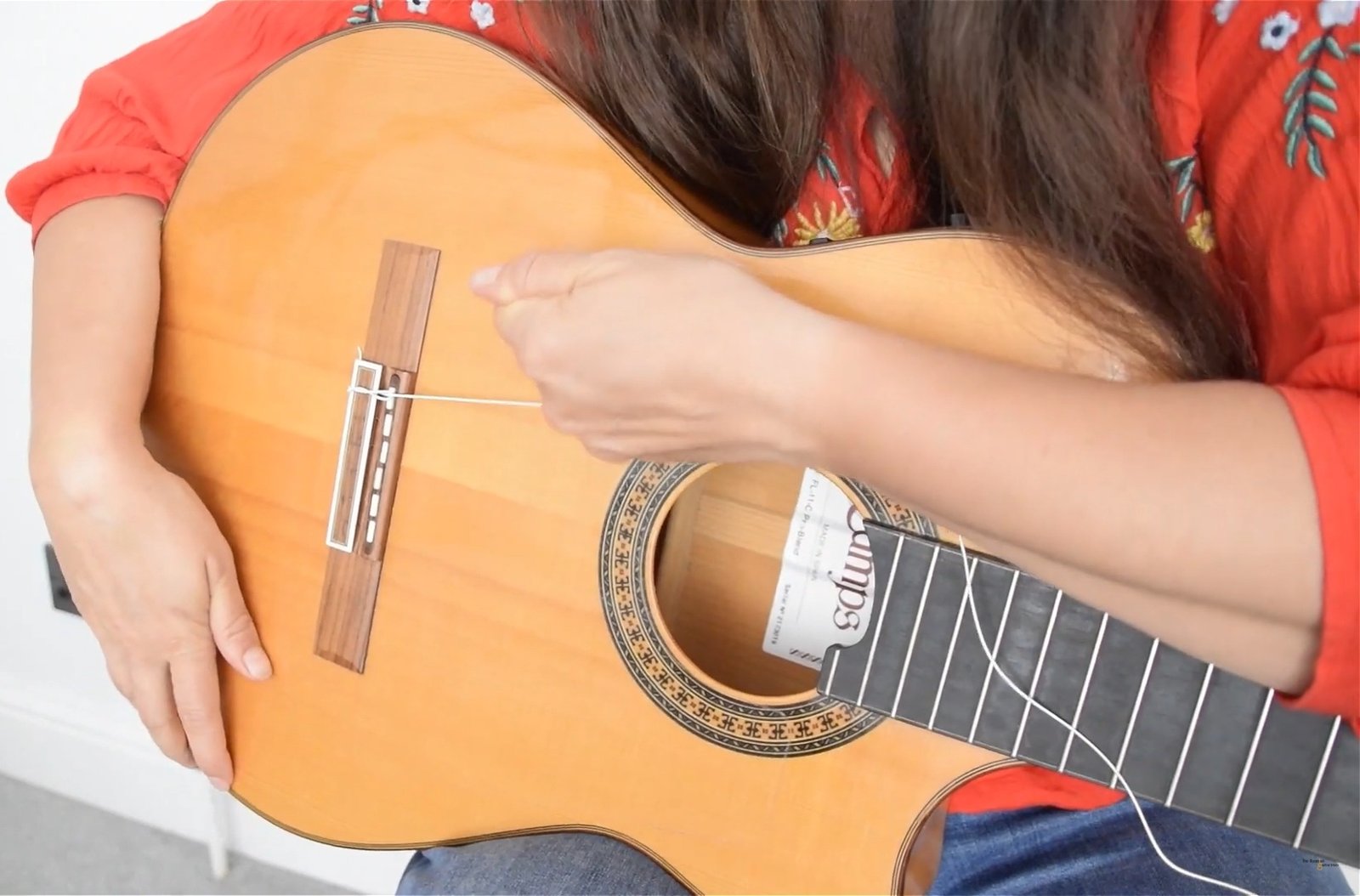
  2. After installing each string, lightly pull it along its length a few times. Don’t overstretch, just enough to help it relax and settle.
  3. Play the guitar: Strumming, plucking, or practicing scales will naturally help the strings stretch and settle faster.

In the first few days, you will probably need to tune the guitar quite often until the strings settle. Some strings can take up to a week to fully stabilize, but the improvement in sound is definitely worth the effort of changing the strings on a nylon-string guitar.

Watch the video on how to change strings on a classical and flamenco guitar

would you like to learn how to play classical or flamenco guitar?

Explore the wide range of courses available on this website, designed to help you take your guitar playing to the next level. Whether you’re a beginner or an experienced player, there’s something here to inspire your practice and improve your skills.

would you like to get an update when a new lesson gets published?

Then sign up for my newsletter!