Watch & Listen to the Soleá Arpeggio Exercise
Before working through the exercises, the lesson below so you can hear how the Soleá arpeggios should sound and feel in context.

Fast, flowing arpeggios are one of the defining sounds of flamenco guitar. They add movement, drama, and elegance to a performance, especially in Soleá, one of flamenco’s most expressive and traditional forms. While these passages can seem intimidating at first, the key to mastering them lies in understanding the rhythm, developing the correct right-hand technique, and practising methodically.
In this lesson, we’ll explore two practical Soleá arpeggio studies that gradually build the speed and coordination needed to perform fast flamenco passages with confidence.
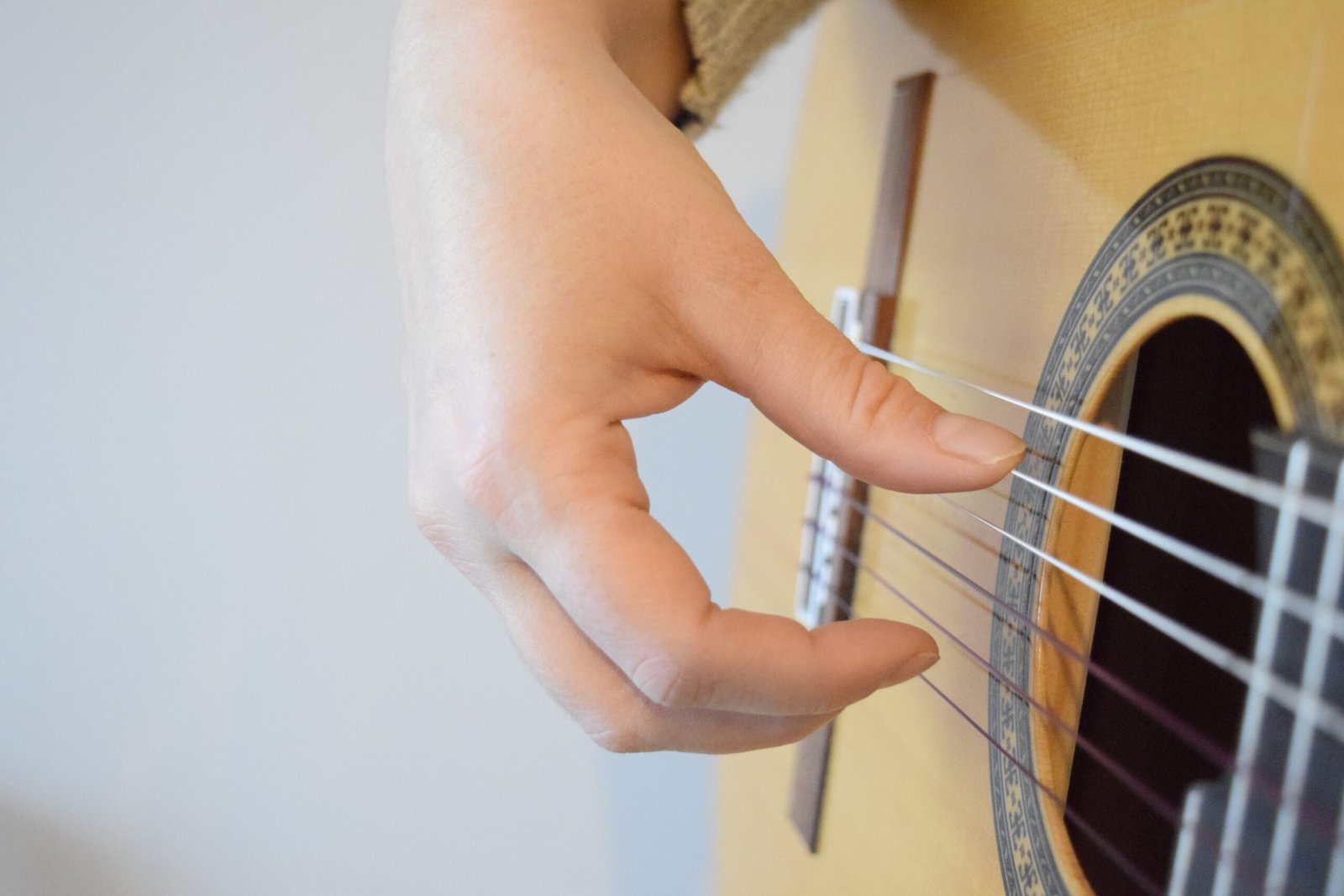

Before learning the complex and beautiful rhythmic variations used in flamenco guitar, let’s first look at the techniques required to play this exercise. We will go through it bar by bar, explaining each technique and how to play it to achieve an authentic flamenco sound.

The exercise starts with a six-note arpeggio on the E major chord played with the thumb, index, middle, ring, middle, and index fingers. It is played using a classical guitar technique, meaning the thumb plays tirando (free stroke), where it finishes in the air after plucking the string rather than following through onto the next string.

The next beat uses pulgar, one of the most characteristic flamenco guitar techniques. The thumb plays apoyando (rest stroke), meaning it follows through and comes to rest on the string below after plucking. The high E string is then played by the index finger using a tirando (free stroke). This thumb-and-index combination is also known as ayudado.

The final beat introduces another essential flamenco technique called golpe (indicated by a square in the sheet music). A golpe is a percussive tap on the guitar's soundboard with the ring finger, performed simultaneously with the thumb playing the G string.

The second bar also begins with an arpeggio, but this time it is played over a C major chord instead of E major. As a result, the root note is now on the A string. Technically, however, nothing changes—the thumb still plays a tirando (free stroke), followed by the same arpeggio pattern with the index, middle, and ring fingers.

The second beat is played using pulgar again, with the little finger adding the hammer-on. It is important to maintain the hand position throughout this passage. Keep holding the C major chord while performing the hammer-on so that the notes continue to ring. In flamenco, especially when playing solo guitar, sustaining the harmony helps fill the sound and creates a richer, more resonant accompaniment. Whenever possible, it is best to play melodic passages from a chord shape rather than lifting the fingers between notes.

The final beat of the second bar begins with a golpe on the G string, followed by a hammer-on and a pull-off. When performing the pull-off, it is important to pull the finger slightly downward before releasing it. This gives the note more volume and produces a much stronger, clearer sound. Many guitarists make the mistake of treating a pull-off like a “reverse hammer-on,” simply lifting the finger off the string. While this may seem easier, it usually results in a weak and less defined sound. By actively pulling the string, you will achieve the stronger articulation that is needed for a convincing flamenco tone.

The third bar begins with another arpeggio, this time played over an Fmaj7 chord. The technique is exactly the same as in the previous bars; the only difference is that the root note is now back on the D string.

In the next beat, the pulgar is combined with a treble note. In flamenco, the bass note is usually slightly anticipated, meaning it is played a fraction of a second before the treble note. This subtle timing difference creates a more authentic flamenco sound and adds rhythmic drive to the phrase.

The final beat of the third bar and the first beat of the fourth bar are played with a golpe on the Fmaj7 chord, followed by E major. In this passage, the thumb strums the lower four strings while the ring finger simultaneously taps the guitar's soundboard to produce the characteristic percussive golpe effect.
If maintaining six notes per beat feels difficult, isolate the picking hand with a dedicated exercise. Alternate the thumb across the bass strings while repeating the same arpeggio pattern:
Start with a simple bass movement such as:
Once comfortable, move the bass notes chromatically through different chord positions. This develops endurance, finger independence, and consistency without requiring complicated left-hand changes.
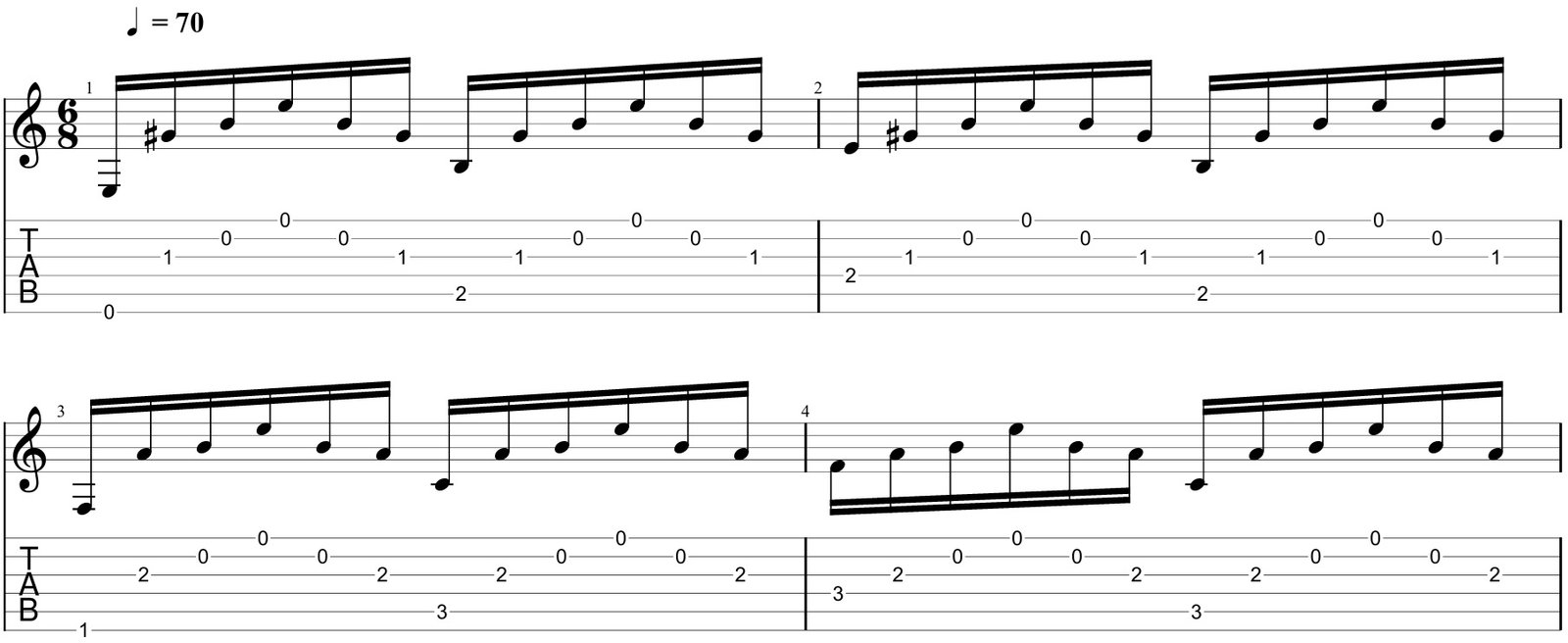

The second Soleá study builds on the first by introducing additional rhythmic changes. While much of the arpeggio pattern remains familiar, the third bar introduces four notes per beat, requiring a smooth transition between different subdivisions. These rhythmic changes demand greater control, making the exercise an excellent bridge between technical practice and real musical performance. The study concludes with a traditional Soleá ending featuring pulgar, arpeggios, and golpe, providing an authentic flamenco finish.
In the second exercise, we will only focus on the techniques used in the seventh and eighth bars, since the first two bars are very similar to the previous exercise.

The seventh bar starts with an arpeggio played with the thumb, index, middle, and ring fingers. Once the pull-offs begin, the right hand switches to free-stroke alternate picking, with the index and middle fingers alternating on each string while the left hand performs the pull-offs.

The eighth bar is the Soleá remate, a phrase used in flamenco to conclude the 12-beat cycle of Soleá. It begins with pulgar, followed by an arpeggio played with the ring, middle, and index fingers. The second beat continues with pulgar until reaching the B string, where a golpe is performed. The final note is then played with the index finger using a tirando (free stroke).